


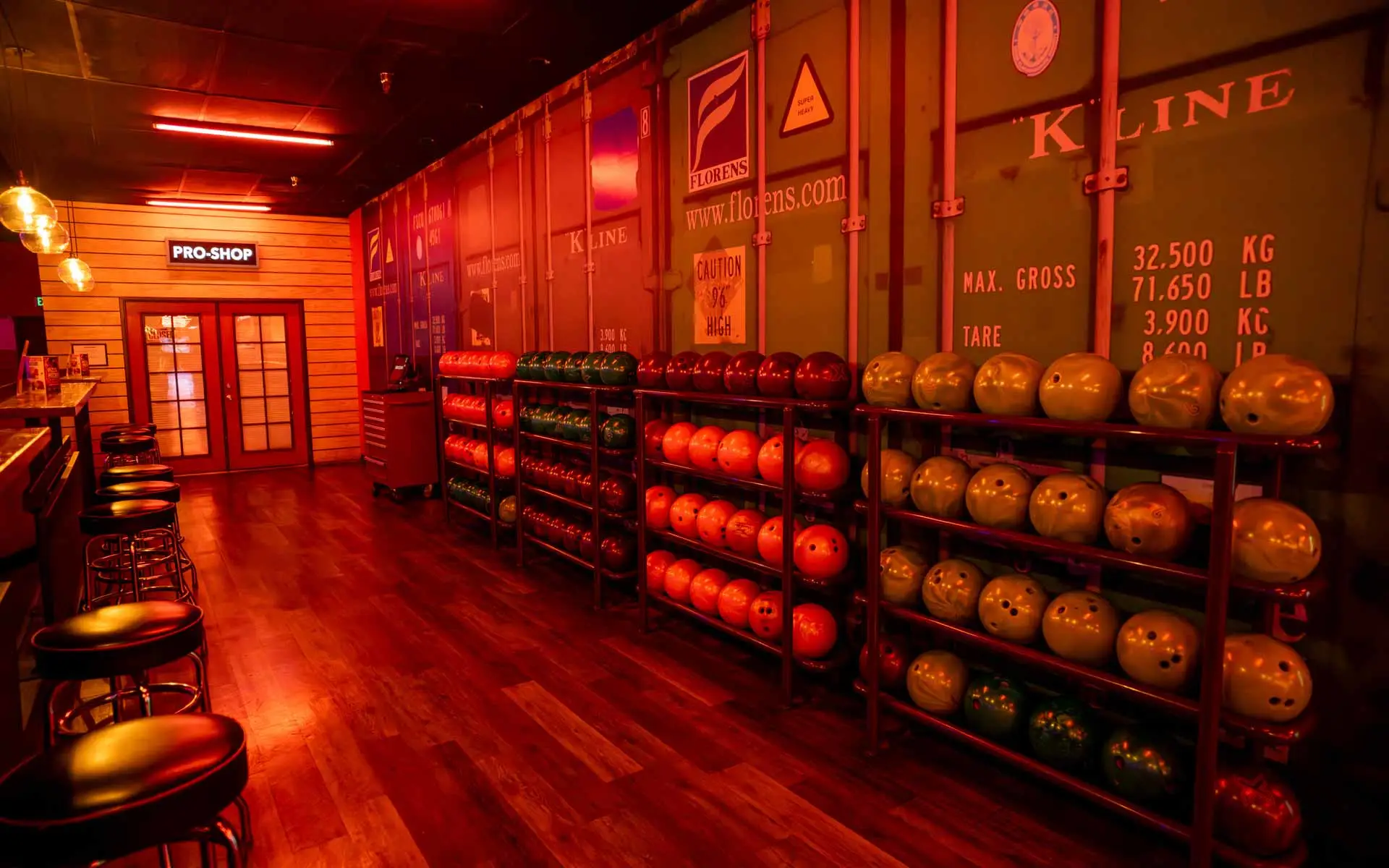
Walk into a pro shop and the wall of bowling balls looks like a candy store with a physics degree. Swirls, sparkles, shiny finishes, matte finishes, and names that sound like superhero villains. Behind the color, there are really only a few things that matter.
These are the types of bowling balls, explained simply: plastic, urethane, and reactive resin, with who each one suits and how to choose. You do not need to know the science to pick well. You only need to know how you bowl, and what you want the ball to do.
Types of bowling balls start with the coverstock
The coverstock is the outer shell of the ball, and it decides how the ball behaves on the lane. It is the main difference between the three types.
Think of it like the tires on a car. Smooth tires roll straight. Grippy tires turn. Bowling balls work the same way. A smoother cover slides down the lane, while a grippier one bites the oil and curves.
Under the shell is the core, a heavy weight block that shapes how the ball spins and rolls. Most beginners do not need to think about the core, but it explains why two balls with the same weight can act differently.
Surface finish matters too. A polished ball slides farther before it hooks, and a sanded or matte ball grips sooner. A good pro shop can adjust the surface to fit your style, and lane conditions change from center to center.
Plastic balls: simple, straight, and great for spares
Plastic, also called polyester, is the classic ball. It is smooth, hard, and does not grab the lane much, so it rolls in a mostly straight line.
That makes it a great fit for beginners, kids, and anyone who wants a dependable ball for spares. Many experienced bowlers keep one plastic ball just for shooting single pins, since a straight shot is easier to repeat.
Plastic is also the most affordable and the most durable, which is why it is a favorite for bowlers on a budget. It does not need much care, and it holds up to years of use. Many house balls are plastic or something close to it, since they are built to be rugged and easy to use.
The downside is that plastic does not hook much, so it can be harder to knock down a full rack of pins. If you want to throw a curve, you will eventually want to move up.
Urethane balls: a smoother hook with more control
Urethane is a step up. Its cover is a little grippier than plastic, so the ball starts to curve, but it does so smoothly and predictably.
That makes it a popular choice for bowlers who are learning to hook the ball, and for experienced players who like control. Urethane works well on drier lanes, where a grippier ball might curve too much.
It is a strong choice for intermediate bowlers, and it also makes a good spare ball for people who want something between plastic and the big hooking balls. It tends to last a long time, and it is less sensitive to oil than reactive resin.
If you are not sure where you fit, urethane is a good middle step. It teaches you what a hook feels like without a wild ride, and it gives you a chance to learn your release before you try something more aggressive. Many bowlers keep a urethane ball for years, long after they have added reactive balls to the bag.
Reactive resin balls: the big hookers pros prefer
Reactive resin is what most serious bowlers use. The cover is porous, so it grabs the oil on the lane and then hooks sharply near the end. That sharp turn helps the ball hit the pins at a better angle, which means more strikes.
Reactive resin balls come in a wide range of designs, from mild to aggressive. Beginners can start with a milder one, and more advanced bowlers can pick a stronger cover for heavier oil.
They do need more care. The cover absorbs oil, so it needs regular cleaning, and the surface wears over time. A pro shop can resurface it and drill it to fit your hand.
This is the ball for bowlers who want to curve the ball, practice often, and use the full lane. It is also the most expensive of the three, so most people try a few balls first.
For help with weight, read our guide to finding the best bowling ball weight for you.
Try different bowling balls at Lucky Strike
The best way to learn is to roll. Use the Lucky Strike location finder to find your nearest center, then check the current specials before you pick a night. Some centers have an on-site pro shop where you can ask questions, so check your center page.
Start with a house ball, notice how it behaves, and try a few weights. Ask a friend to watch your shot, and take a little time between frames to see how the ball moves. The lanes are sleek, the cocktails are cold, and nobody needs a physics degree to enjoy a good strike. Bring a friend, compare notes on how each ball rolls, and keep score. In a few visits, you will know which type feels right, and you will have a better idea of what to ask for when you are ready to buy your own.
Feel Lucky.