

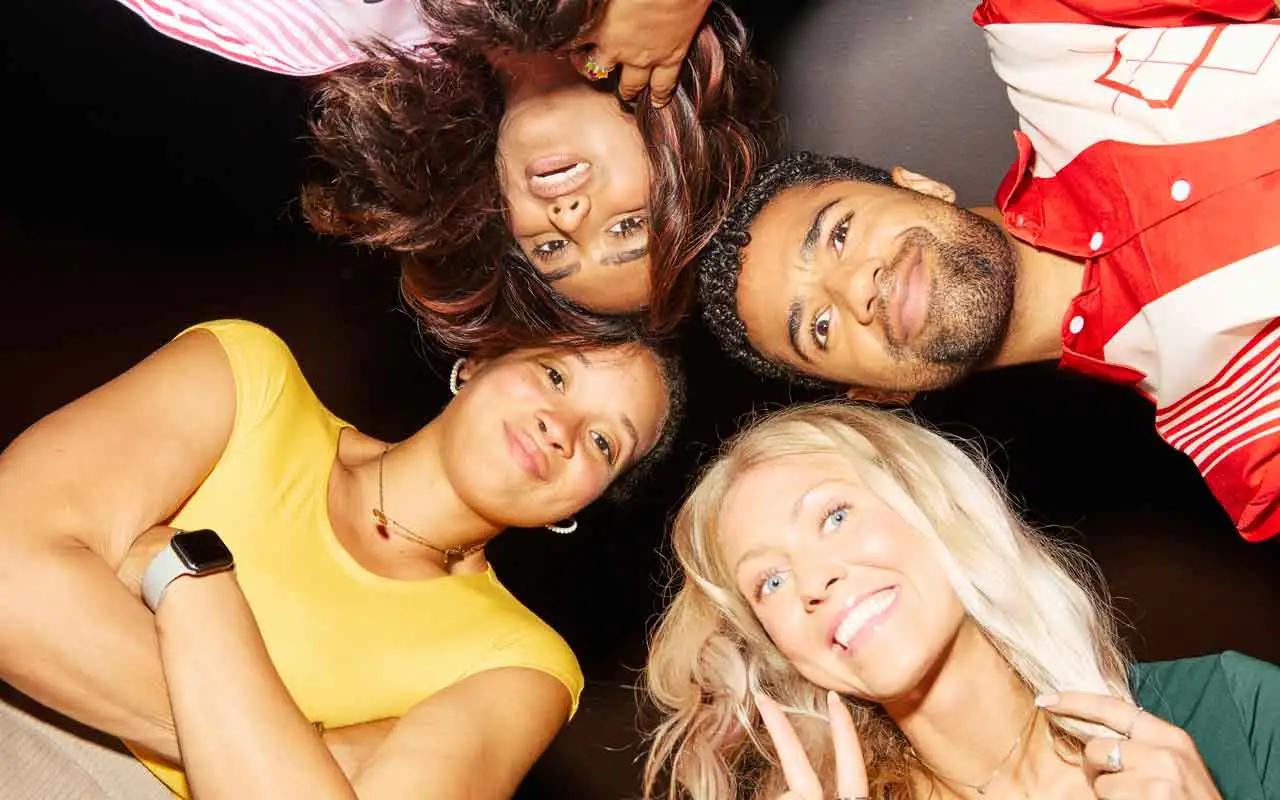
Sitting across from someone at a bar and hoping the conversation carries the entire evening used to be the default plan. It still works in small doses, but the broader culture has moved. Competitive socializing, the category of nightlife built around shared games and activity-driven experiences, has grown over 160% in the past five years. The appeal is straightforward: people want their nights to produce something, a shared victory, a ridiculous loss, a moment that gets retold in the group chat for weeks. Lucky Strike sits at the center of that shift, combining bowling, cocktails, and a full roster of experiences into a single venue that keeps the competitive energy building all night.
What competitive socializing actually means
The term sounds like industry jargon, but the concept is simple. Competitive socializing describes any venue or experience where gameplay and hospitality merge into one night. Bowling, arcade challenges, billiards, karaoke battles, laser tag. The activity provides structure and energy, while the food, drinks, and atmosphere turn the evening into something worth dressing up for. The result is a night that moves on its own, without the group needing to manufacture momentum out of thin air.
This is not a niche development. The experiential leisure sector has seen a 455% increase in multi-activity venues over the past five years, according to industry reporting. Younger adults are drinking less and expecting more. Eventbrite's 2026 Social Study found that nearly 80% of adults between 18 and 35 want to attend more live, in-person events, and the majority of them want socializing to happen around an activity rather than as the main focus. People are showing up for puzzle competitions, music bingo, creative workshops, and, consistently, the lanes. The common thread is that the best nights are the ones where something is happening, not just where something is being served.
Why bowling is the original competitive social experience
Long before anyone coined the term, bowling was already delivering exactly what competitive socializing promises. It is a game anyone can play regardless of skill level, built around shared turns and natural pauses that keep conversation flowing between frames. A group of six people with wildly different athletic backgrounds can still have a legitimate competition, and the scoring keeps just enough tension in the room to make every roll feel like it matters.
At Lucky Strike, that foundation gets the full treatment. The lanes are designed to feel like a destination, not a rec center. Sleek lighting, lounge-style seating, and a cocktail program that holds its own against standalone bars transform the classic game into something with real nightlife polish. The menu delivers shareable plates and upgraded appetizers meant for groups that plan to stay awhile. Blacklight bowling after dark adds another layer, turning the lanes into a glow-charged, high-energy environment where every frame lands a little harder.
The format also scales effortlessly. A couple on a date can claim a single lane and build an entire evening around it. A group of twelve can lock down a section and turn the night into an event. The game adjusts to the size and energy of whoever is playing, which is exactly why bowling has survived every entertainment trend for decades.
Stacking experiences keeps the energy climbing
The venues that win in competitive socializing do not rely on a single activity. They layer multiple options so the group never hits a dead spot. Lucky Strike's experiences are built around this principle. Between frames, the arcade offers head-to-head challenges on retro and modern games. Billiards and air hockey tables let smaller groups break off for a quick side competition. Karaoke rooms at select locations provide a stage for the person who has been waiting all night for their moment. Balladium, a ball-blasting arena, delivers the kind of high-energy, physical gameplay that leaves the group louder than when they walked in.
The critical design choice is that everything lives under one roof. There is no cab ride between activities, no cover charge at the next stop, no thirty-minute debate about whether to move or stay. The night flows from one experience to the next, and the competitive thread keeps everyone locked in. That layered format is exactly what industry data says people are looking for: a single venue that generates multiple highlight moments throughout the evening.
For groups celebrating a milestone or organizing a bigger gathering, Lucky Strike's Adult Social Events packages add reserved lanes, curated food and drink options, and dedicated space. It takes the competitive socializing format and sharpens it into an intentional occasion, whether that is a birthday, a reunion, or just a Saturday that deserves more effort than the usual rotation.
The cultural shift behind the scoreboard
Competitive socializing is not just a hospitality trend. It reflects a genuine change in what people expect from their leisure time. Post-pandemic, the appetite for shared, in-person experiences surged and never receded. At the same time, declining alcohol consumption, especially among younger demographics, removed the social lubricant that bars relied on as their primary value proposition. What replaced it is the activity itself: the game, the challenge, the shared win or spectacular failure that gives the group something to bond over beyond a drink order.
Lucky Strike lands right at that intersection. The bar is excellent, the cocktails are crafted, and the bar and nightlife programming at select locations includes VIP bottle service, fire pits, and entertainment that runs late. But the alcohol is an enhancement, not the engine. The engine is the competition, the movement between activities, and the atmosphere that makes every visit feel like something worth clearing the calendar for. That distinction is why the competitive socializing model keeps growing while traditional nightlife fights for relevance.
Find your lane in the competitive socializing wave
The next great night out is not sitting at a bar hoping the energy picks up. It is rolling a strike in the tenth frame while your friends lose their minds two lanes over. Find the nearest Lucky Strike with the location finder, check current specials, and see what happens when the night has a scoreboard.